
Home / QA & QC Practices
Every batch designed, tested and documented, so the concrete on your site performs exactly as specified.
Our commitment to quality
Concrete strength can't be judged by appearance. It has to be designed, controlled and proven. We test incoming raw materials, design mixes to IS standards, weigh-batch on computerised plants, check fresh concrete before dispatch and verify strength through cube testing in our laboratory.
Quality assurance (QA)
The system that prevents problems: approved materials, proven mix designs and documented procedures.
Quality control (QC)
The testing that proves results: checking materials and concrete at every stage against defined limits.
Our ready-mix concrete is certified by the Bureau of Indian Standards (BIS) to IS 4926:2003, the Indian Standard code of practice for ready-mixed concrete, with a quality management system in accordance with IS/ISO 9001:2015 (BIS Licence No. RM/L-6000078.1, valid until 2 November 2027). Our processes for materials, production, testing, delivery and customer feedback are documented, audited and continually improved.
Our quality process
1
Cement, aggregates, water and admixtures from approved suppliers.
2
Aggregates tested for grading, silt content and strength.
3
Designed per IS 10262 for the required grade, workability and exposure.
4
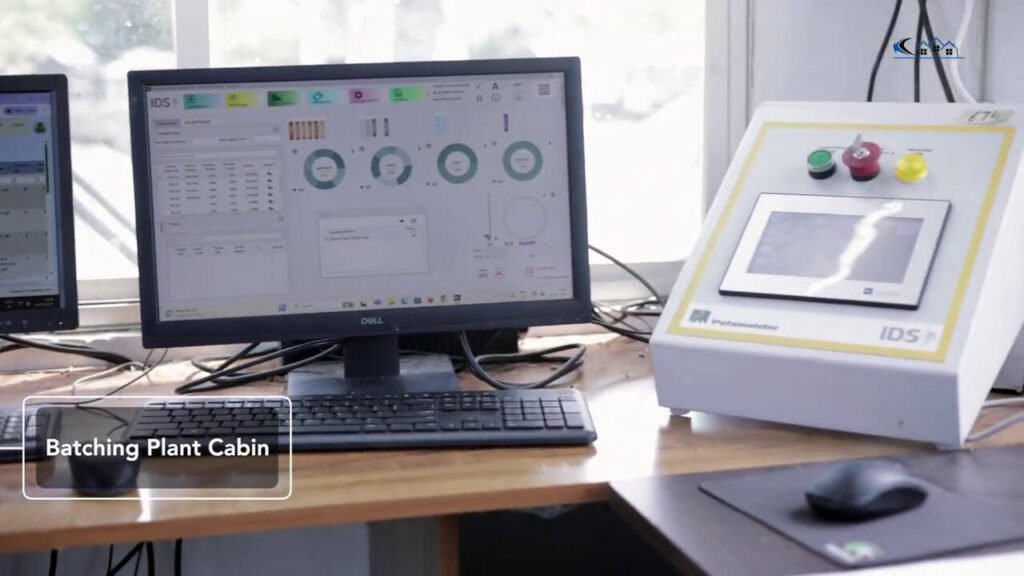
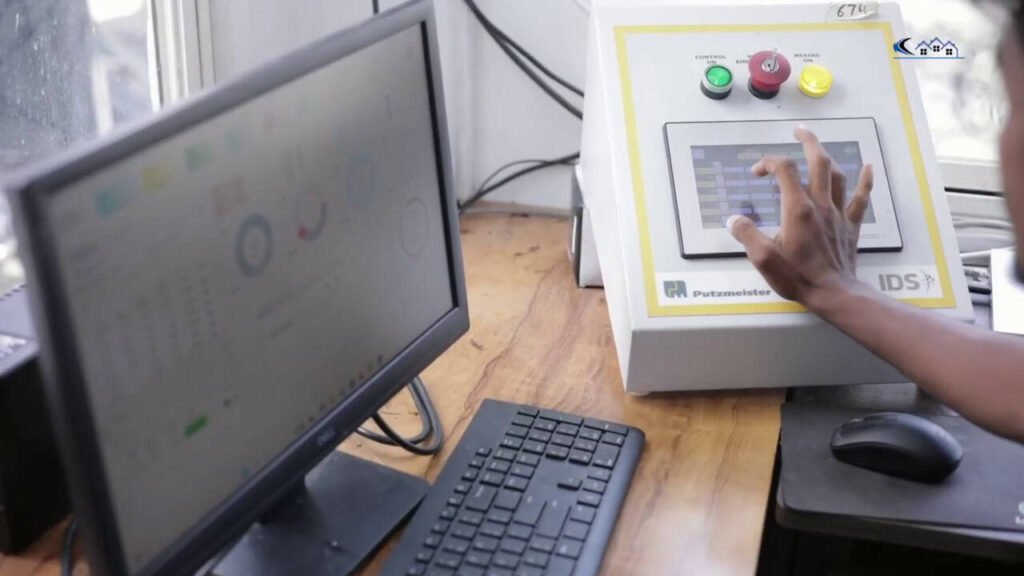
Accurate weigh-batching with batch records.
5
Slump checked before dispatch.
6
Transit mixers keep concrete agitated and workable.
7
Cubes cast from deliveries for strength testing.
8
Cubes cured and tested at 7 and 28 days.
9
Results documented and available on request.
Our laboratory
[Each plant has its own laboratory / A central laboratory at X serves both plants], equipped to test raw materials and concrete and run by trained quality control staff.
QA & QC testing practices
What it is: Concrete cubes are crushed in a compression testing machine to measure the load they carry before failure.
Why it matters: It confirms the concrete has achieved its specified grade, for example 25 N/mm² for M25.
How we do it: Cubes tested at 7 and 28 days, following IS 516.
Frequency: [e.g. per IS 456 sampling frequency, based on volume supplied]
View test details →What it is: A parallel set of cubes is cured at a controlled elevated temperature, so a strength result that correlates to 28-day performance is available within 24 to 48 hours.
Why it matters: A batching error or mix issue shows up in a day or two, while the next day's production can still be corrected.
How we do it: As per IS 9013, alongside standard 28-day testing to IS 516 and IS 456.
Frequency: [e.g. on request / for fast-track pours and new mix designs]
View test details →What it is: Aggregates are passed through standard sieves to find their particle size distribution (grading).
Why it matters: Well-graded aggregates pack tightly, improving workability, strength and cement economy.
How we do it: As per IS 2386 (Part 1), checked against IS 383 grading zones.
Frequency: [e.g. daily / per consignment]
View test details →What it is: Measures the amount of fine silt and clay in sand.
Why it matters: Excess silt weakens the cement-aggregate bond, raises water demand and reduces strength.
How we do it: As per IS 2386 (Part 2), against IS 383 limits.
Frequency: [e.g. per consignment]
View test details →What it is: Measures the workability of fresh concrete using a standard slump cone.
Why it matters: The right workability lets concrete be placed, compacted and pumped without segregation.
How we do it: As per IS 1199, at the plant before dispatch [and at site on request].
Frequency: [e.g. every load]
View test details →What it is: Fresh concrete samples are cast into standard 150 mm cube moulds, then cured in water.
Why it matters: These cubes are later crushed to give documented proof of the concrete's grade.
How we do it: Sampling, casting and curing per IS 1199 and IS 516.
Frequency: [e.g. per IS 456 sampling frequency]
View test details →Standards we follow
IS 456 Plain and reinforced concrete, code of practice
IS 4926 Ready-mixed concrete, code of practice
IS 10262 Concrete mix proportioning guidelines
IS 383 Coarse and fine aggregate for concrete
IS 2386 Methods of test for aggregates
IS 1199 Sampling and analysis of fresh concrete
IS 516 Methods of tests for strength of concrete
[Add cement, water and admixture standards used, e.g. IS 269, IS 9103]
Benefits for customers
Guaranteed grade: The concrete you order is the concrete you get
Consistency: Same quality from the first load to the last
Durability: Longer-lasting structures with fewer repairs
Documentation: Test reports for consultants, audits and approvals
Peace of mind: Fewer site rejections and delays
Why quality matters
Concrete is the backbone of a structure, and mistakes can't be undone once it hardens. Poor-quality concrete can lead to cracking, low strength, reinforcement corrosion, costly repairs and, in the worst cases, structural failure. A tested, controlled supply protects your investment for decades.
Request a plant visit
Engineers, architects, builders and homeowners are welcome to visit any of our plants at Kottayam, Thodupuzha, Cherthala or Kanjirappally to see batching and laboratory testing first-hand.
Request a Plant Visit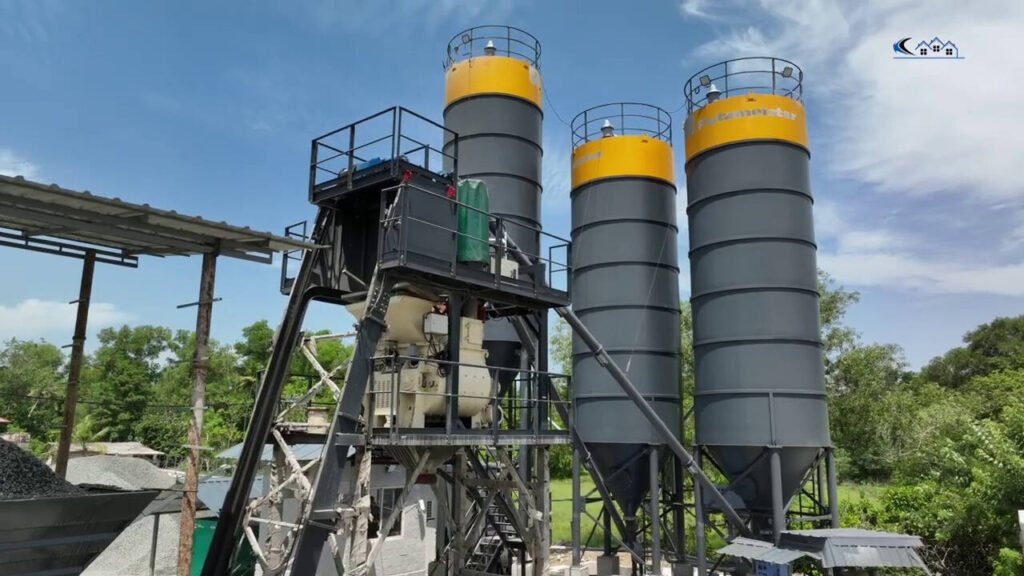
Do you provide cube test reports?
Yes. Cube test results for your supply are available on request.
At what age are cubes tested?
Typically at 7 days for early strength and 28 days to confirm the specified grade.
Can my engineer witness testing?
Yes. Contact us in advance to arrange a visit.
What happens if a test result doesn't meet requirements?
[Describe the client's procedure: investigation, retesting and corrective action under our BIS-certified quality system.]
Is concrete tested before it leaves the plant?
Yes. Every load is checked for slump before dispatch, and samples are taken for cube testing.